
Treatment
Non-Surgical Spinal Decompression
"Decompression" covers two very different things: an operation, and a treatment on a table that involves no incision at all. We provide the second. This page explains how they differ and when it is reasonable to try the non-surgical route first.
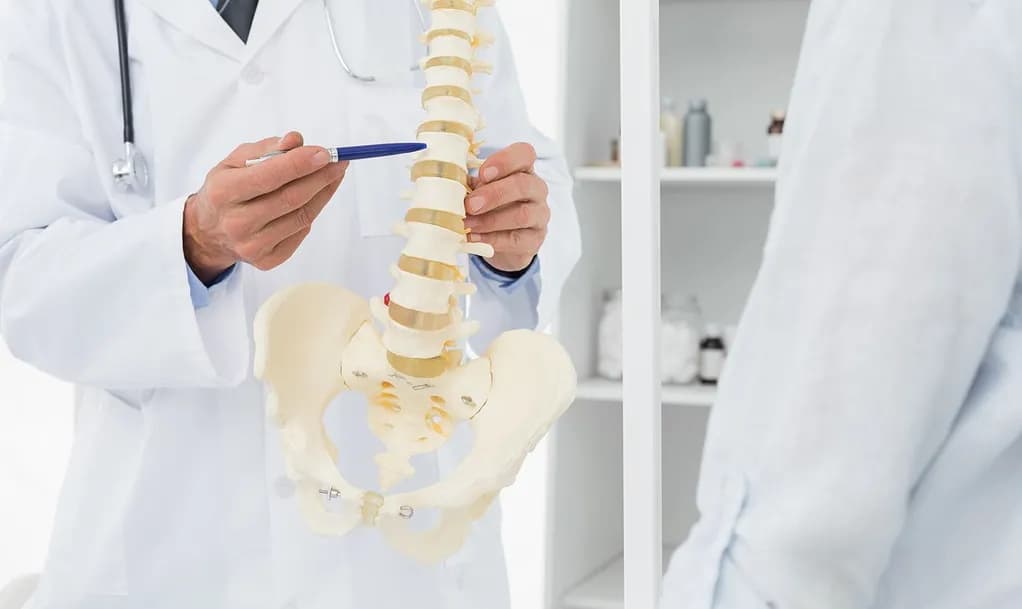
Two treatments, one word
Both approaches are trying to do the same thing — take pressure off a disc and the nerves around it. They go about it in completely different ways.
Non-surgical decompression is what we do here. You lie fully clothed on a KDT Neural-Flex table while it applies slow, controlled traction to separate the vertebrae and unload the disc. Nothing is cut, nothing is injected, and you drive yourself home. A session runs eight to twelve minutes.
Surgical decompression is an operation performed by a surgeon, under anesthetic, to physically remove what is pressing on the nerve. Depending on the problem that might be a diskectomy (removing disc material), a laminotomy (removing part of the bony arch to widen the canal), or a corpectomy (removing a vertebral body). It is used where there is a bony growth, a ruptured disc, or a neurological problem that will not wait.
What the non-surgical route is trying to achieve
Taking load off a compressed segment is meant to set off a chain of things, rather than do one:
- Negative pressure inside the disc, letting a bulge draw back in
- Better flow of fluid, oxygen and nutrients into a disc that has no blood supply of its own
- Less pressure on the nerve root, which is usually where the leg or arm pain is coming from
- Less pressure on inflamed facet joints as disc height is restored
- Enough relief to get moving again, so the stabilising exercises become possible
Why try the non-surgical route first
For most disc and nerve-root pain, the conservative option is the one to exhaust first — and that is the ordinary standard of care, not a chiropractic opinion. Surgery carries anesthetic risk, a recovery period, and the possibility of not working: "failed back surgery syndrome" is a recognised enough outcome to have its own name.
Non-surgical decompression has neither the risk nor the downtime. What it costs you instead is time and persistence — 20 to 30 sessions at three to four a week is a real commitment, and it is the main reason people stop before finding out whether it would have worked.
None of which means surgery is the wrong answer. Sometimes it is plainly the right one, and you should expect us to say so.
How we work out whether it suits you
Consultation
You talk through the pain, your health history and what it is stopping you doing with Dr. Brent Reiche.
Examination
A chiropractic examination, plus standard neurological, orthopedic, postural and physical tests. X-rays if your condition calls for them, taken here.
Report of findings
Dr. Reiche explains what he found and whether decompression belongs in your plan — and tells you plainly if your condition needs care from another provider, including a surgical opinion.
A course of treatment
If it is a fit, you start a course. What that involves in practice is set out on the [spinal decompression](/spinal-decompression) page.
Common questions
What is the difference between non-surgical and surgical decompression?
Non-surgical decompression uses a traction table to separate the vertebrae and unload the disc, with no incision and no anesthetic. Surgical decompression is an operation that removes what is pressing on the nerve — disc material, or bone. Non-surgical is the kind we provide.
Is non-surgical decompression painful?
It should not be. The pull comes on and off gradually rather than being held, and most people find it relieving. Tell the chiropractor at any point how it feels.
Should I try this before considering surgery?
For most disc and nerve-root pain, exhausting the conservative options first is the usual standard of care. There are exceptions — see the note above on symptoms that need urgent assessment — and Dr. Reiche will tell you if yours is one.
How long is each session, and how many will I need?
Eight to twelve minutes of treatment, and a course of 20 to 30 sessions at three to four a week. The detail is on our spinal decompression page.
Can I have decompression alongside other treatment?
Yes. Electrical stimulation, ultrasound or therapeutic laser are often used in the same visit, and decompression sits alongside the rest of our therapies and techniques.
How do I find out if I am suitable?
Book a consultation and examination. Call (207) 571-8028 or request an appointment.
Related
Spinal Decompression
Decompression gently unloads the spine to take pressure off a bulging or herniated disc and the nerves around…
Sciatica Care in Saco, ME
Sciatica is pain, numbness or tingling that starts in the lower back and travels down the leg. It happens…
Therapies & Techniques
Alongside chiropractic adjustment, our Saco, ME clinic uses a range of hands-on and equipment-based…
Ready to feel better?
If you’re dealing with stubborn back, hip or knee pain, start by checking your Pain & Mobility Score. It’s a quick way for our team to see what’s going on.